



tāwari
Ixerba brexioides | tāwari,, whakou (flowers)
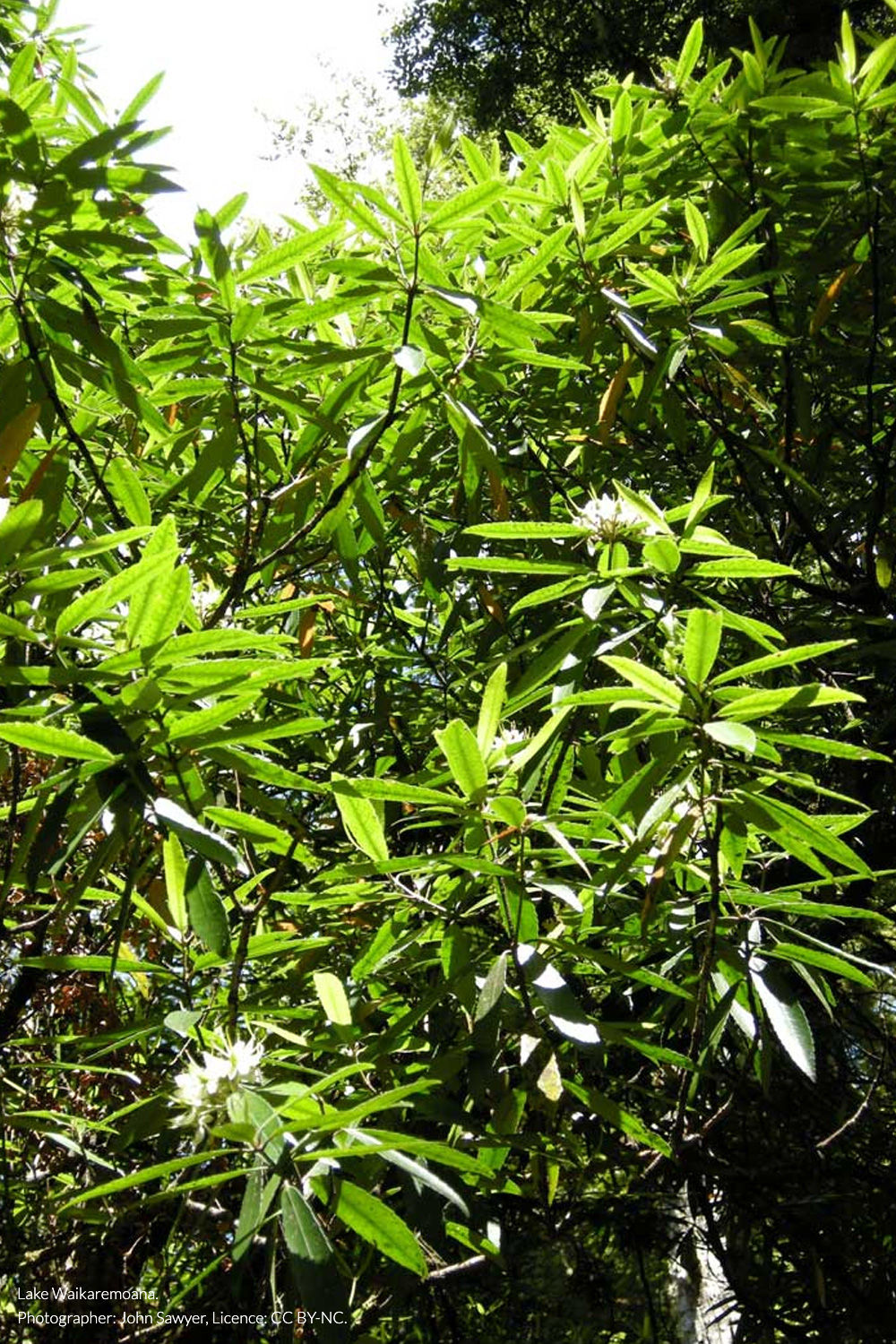
A beautiful tree with glossy, somewhat tropical-looking leaves are smallish, serrated, and leathery, displaying a peculiar olive-green hue that sometimes turns reddish with age. In late spring, it produces attractive clusters of fragrant white flowers at the branch tips in symmetrical bunches contrasting against the dark green, similarly arranged leaves. In autumn, leathery seed capsules split open to reveal glossy black seeds with a striking orange-scarlet aril. These nutrient-rich fruits are a favorite of tūī and other fruit-eating birds, which gather to feast on the small aril attached to each seed. During spring, the blossoms offer nectar and pollen for bees, which produce the delicious tawari honey, a light in colour with a delightful butterscotch-like flavour. Unfortunately, tāwari is challenging to cultivate. It often grows naturally near kauri, the species probably depends on a mycorrhiza, and if planted next to Griselinia littoralis, it does much better.
typical habitat.
montane forest
subtropical forest
drainage.
well drained
sun.
partial shade
mature specifications.
height | 10m
width | 2m / 40cm (trunk)
pollinators calendar.
flowering | (September-) October-November (-December)
fruiting | November - January (-March)
did you know?
Māori highly prized these flowers, using them for necklaces and adornment during festive occasions. They even have a specific name for when in flower; whakou.