
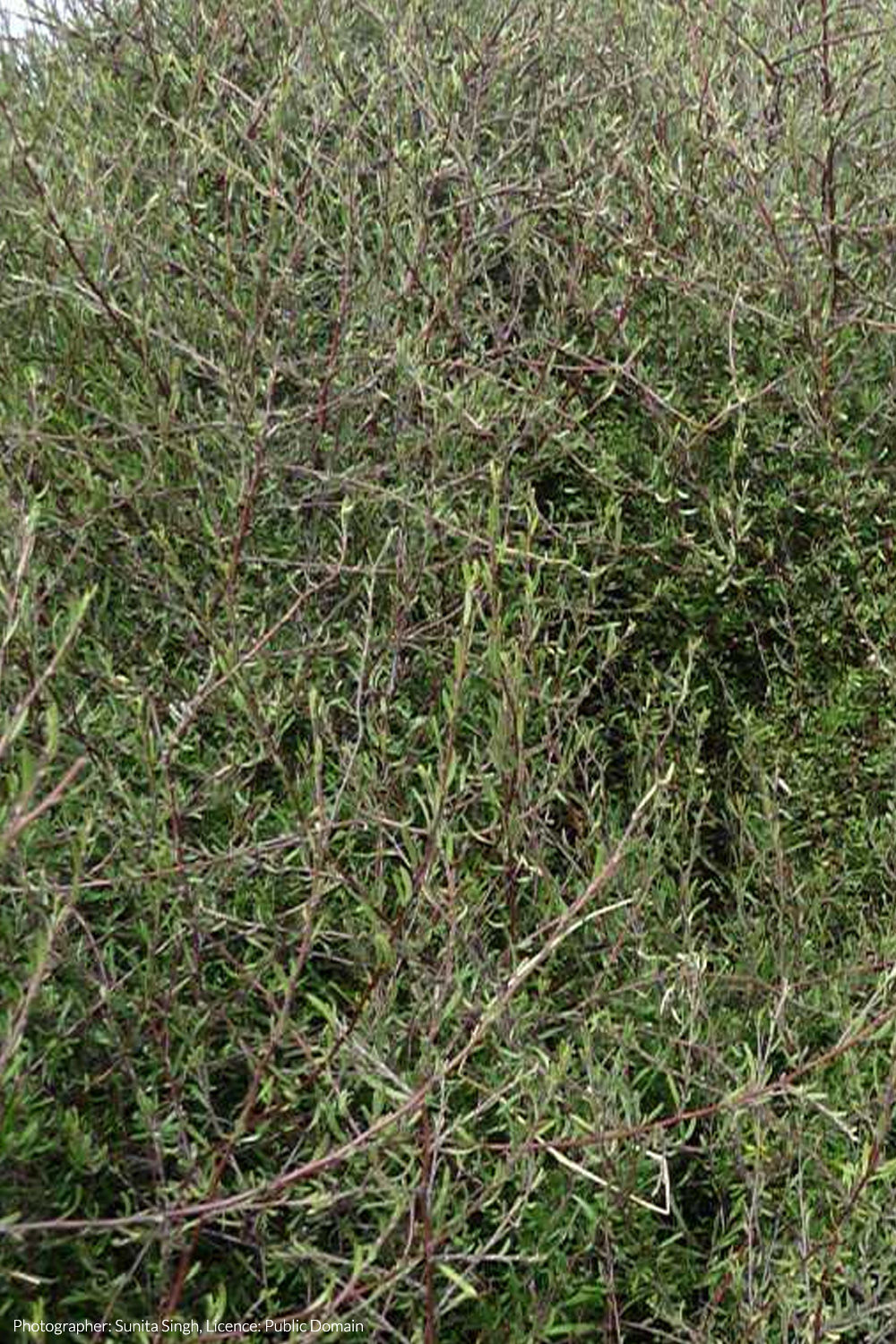


mākaka
about.
Plagianthus divaricatus | mākaka, salt marsh ribbonwood, marsh ribbonwood
A small endemic shrub forming dense, tangled thickets of silvery stems with small, elongated green leaves. It produces masses of tiny, cream, strongly vanilla-scented flowers in spring, followed by fruit capsules whose seeds float on water and attract native birds. Salt- and wind-tolerant, it thrives in wet, swampy coastal soils and estuaries.Hardy and semi-deciduous, it can be used in coastal restoration, or as a trimmed hedge or low shelter.
typical habitat.
salt marshes
estauries
brackish streams
drainage.
wet
moist
well drained
free draining
dry
sun.
full sun
partial shade
mature specifications.
height | 2m
width | 2m
pollinators calendar.
flowering | September – November
fruiting | December - March
did you know?
Saltmarsh ribbonwood has consistently been classified as "Not Threatened" in conservation assessments since 2004. This stable status is likely due to its isolated habitat, which largely protects it from human impact.