


miro
Prumnopitys ferruginea | miro, brown pine
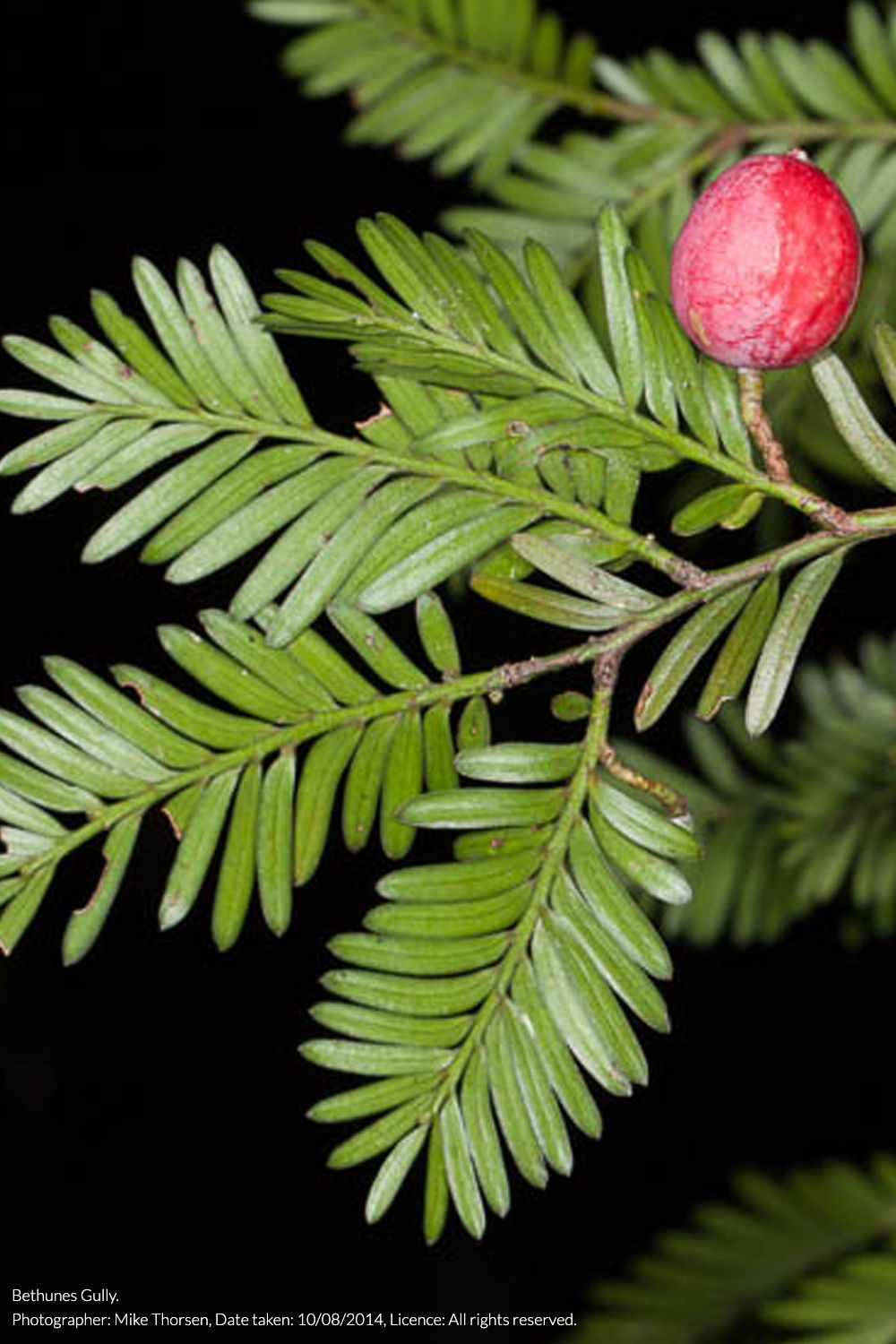
Miro is a striking, round-headed tree with yew-like foliage produces bright red, fleshy fruit favored by birds. Its grey-brown bark peels distinctively, and it's valued for its strong timber and suitability for hedging. While young, it needs protection from frost, but it tolerates temperatures down to -6°C once established. As the tree matures, its bark flakes off, leaving a distinctive hammer mark pattern. Each year, miro produces a crop of fleshy, bright red, plum-like fruit in autumn to early winter which is an important food source for native birds like kererū, kākā, and kōkako, who then disperse the seeds.
typical habitat.
lowland forest
montane forest
drainage.
well drained
moist
sun.
partial shade
full sun
mature specifications.
height | 30m
width | 6m / 1m (trunk)
pollinators calendar.
flowering | June–August–October
fruiting | November–April (ripe fruits typically found). Fruits take 12–18 months to mature.
did you know?
While miro and matai might initially appear similar, several key features distinguish them. Miro has longer, broader leaves with green undersides that taper to a point, unlike matai's rounded leaves with white undersides. Their cones also differ: miro's are red and oval, while matai's are blue-black. Both trees exhibit flaking bark with a "hammer mark" pattern, but miro's is less pronounced and lacks the vibrant colors found in matai's bark.