

toothed horoeka
about.
Pseudopanax ferox | horoeka, toothed lancewood, fierce lancewood
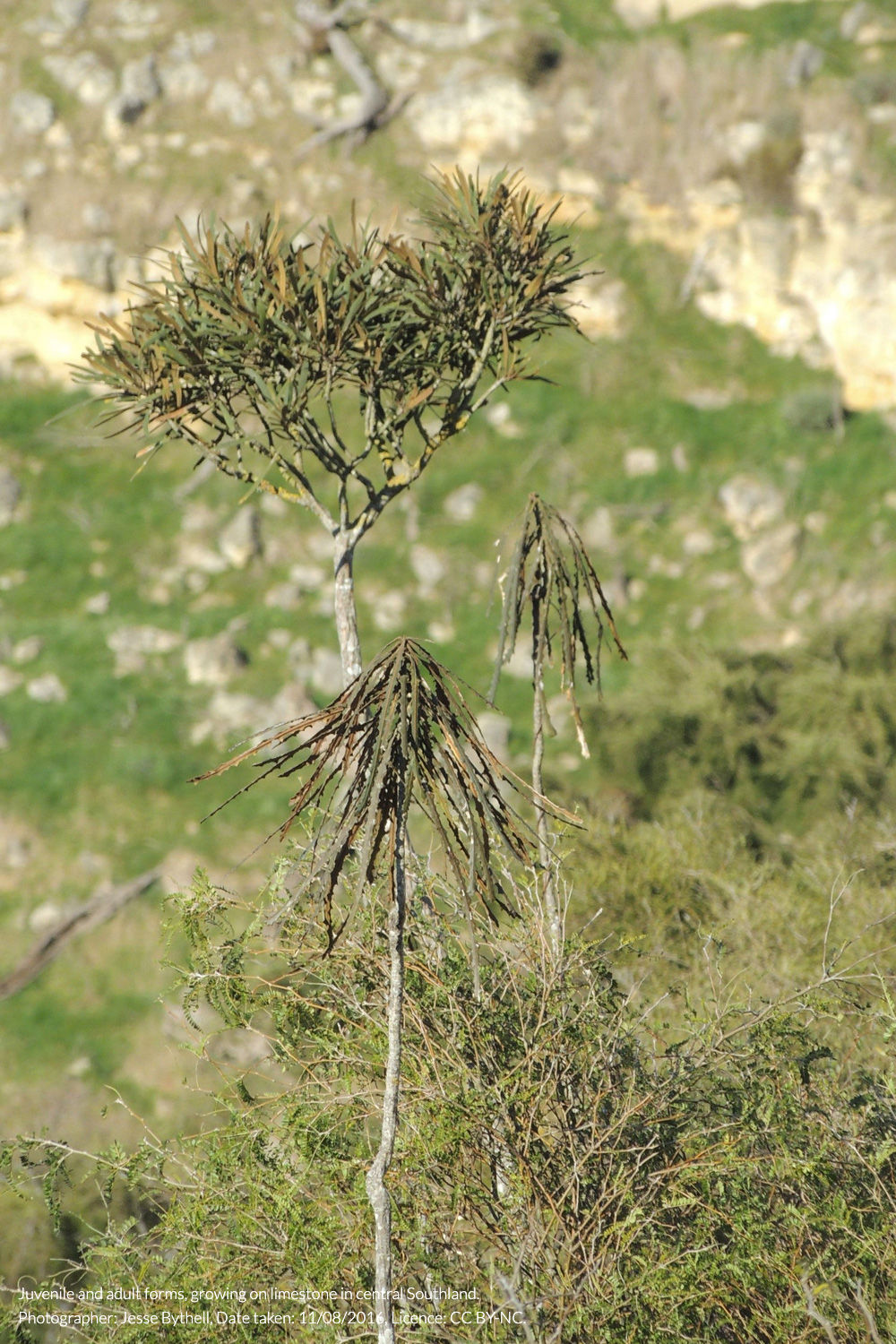
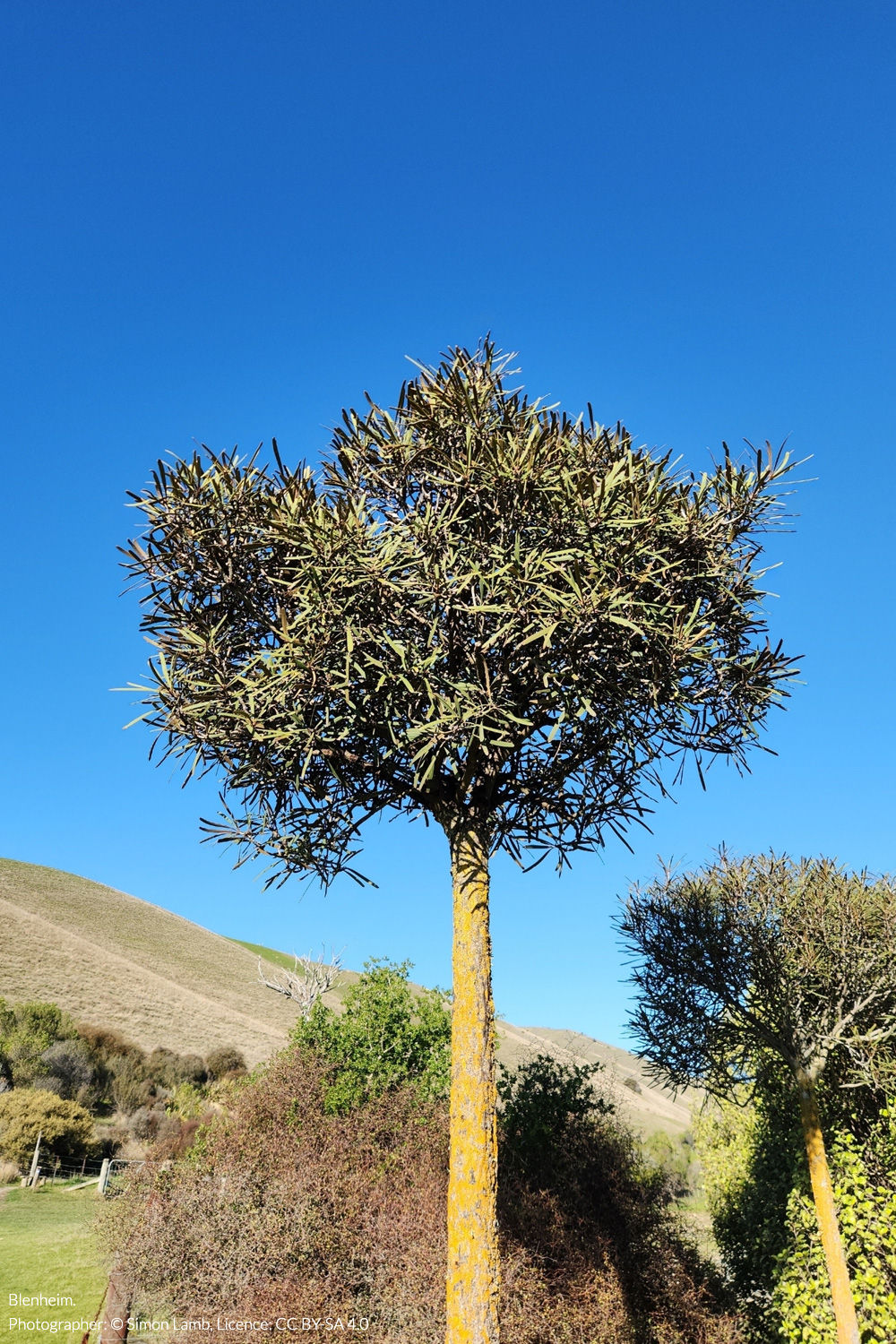
Offering a captivating transformation from its slender, divaricating juvenile stage with long, sharply toothed leaves to a bushier adult form with a braided look and longer leaves that are toothed towards the tip. A striking architectural plant, ideal for mixed plantings or as a trimmed feature around pools and patios. Reaching maturity in 10-15 years its unique narrow, saw-like brown juvenile leaves provide a dramatic touch even in small spaces, eventually developing into a clean-trunked, bushy tree attractive to pollinators. Hardier than P. crassifolius, it's a spectacular specimen.
typical habitat.
coastal forest
coastal scrub
dune forest
lowland forest
montane forest
subalpine forest
subalpine scrub
drainage.
dry
free draining
well drained
moist
sun.
full sun
full shade
partial shade
mature specifications.
height | 7m
width | 2m / 20cm (trunk)
pollinators calendar.
flowering | November - April
fruiting | December - June
did you know?
Perhaps the most peculiar trait of New Zealand's unique plant life is heteroblasty, where juvenile foliage strikingly differs from adult leaves. This is best seen in the growth of our two common lancewood species (P. crassifolius and P. ferox) and has fascinated scientists seeking its origins. One prominent theory suggests this evolution was a defense against browsing by the extinct moa. However, the more widely accepted explanation links it to climatic conditions. Ultimately, the true cause might involve a combination of various environmental pressures shaping a species' growth form.