

tawa
Beilschmiedia tawa | tawa
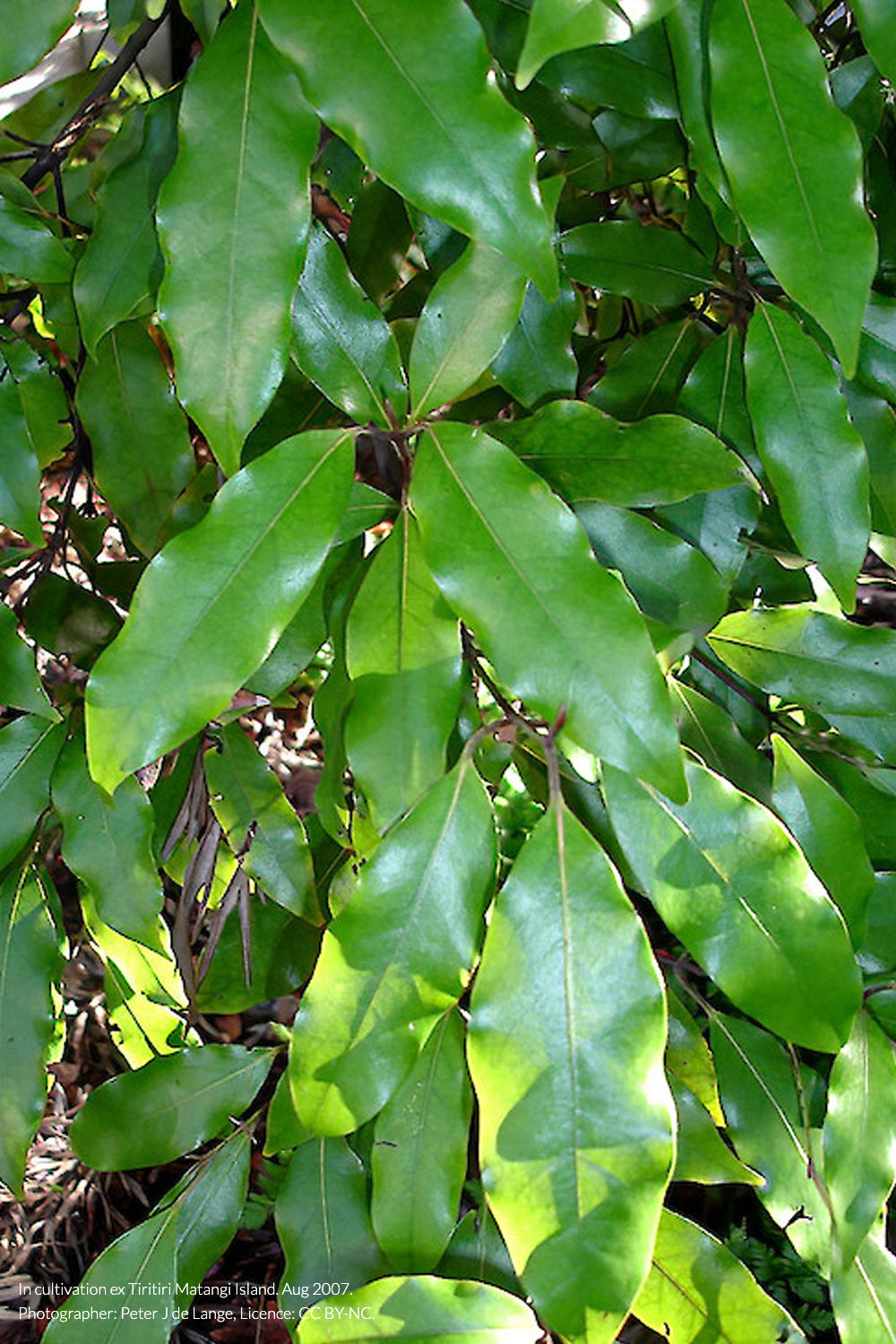
A long-lived, evergreen tree noted for its impressive stature. While slow-growing, it eventually becomes a majestic specimen of the forest, with near-black bark and graceful, willowy, pale green leaves. In winter, tawa produces masses of olive-shaped, purple fruits that are a favourite food source for birds, especially kererū. This versatile tree is a popular choice for parks, large gardens, and revegetation projects, adding visual interest and providing sustenance for native birdlife.
typical habitat.
lowland forest
lower montane forest
drainage.
moist
well drained
free draining
sun.
full sun
partial shade
mature specifications.
height | 30m
width | 15m / 1.2m (trunk)1.2m (trunk)
pollinators calendar.
flowering | (October-) January (-May)
fruiting | (December-) January (-March)
did you know?
Tawa's dark purple fruits were a valuable food source for both Māori and the kererū. The large size and shape of the fruit are specifically adapted to attract these birds, as Tawa relies solely on kererū and kōkako for seed dispersal.