

shrubby tororaro
Muehlenbeckia astonii | shrubby tororaro, wiggywig, mingimingi
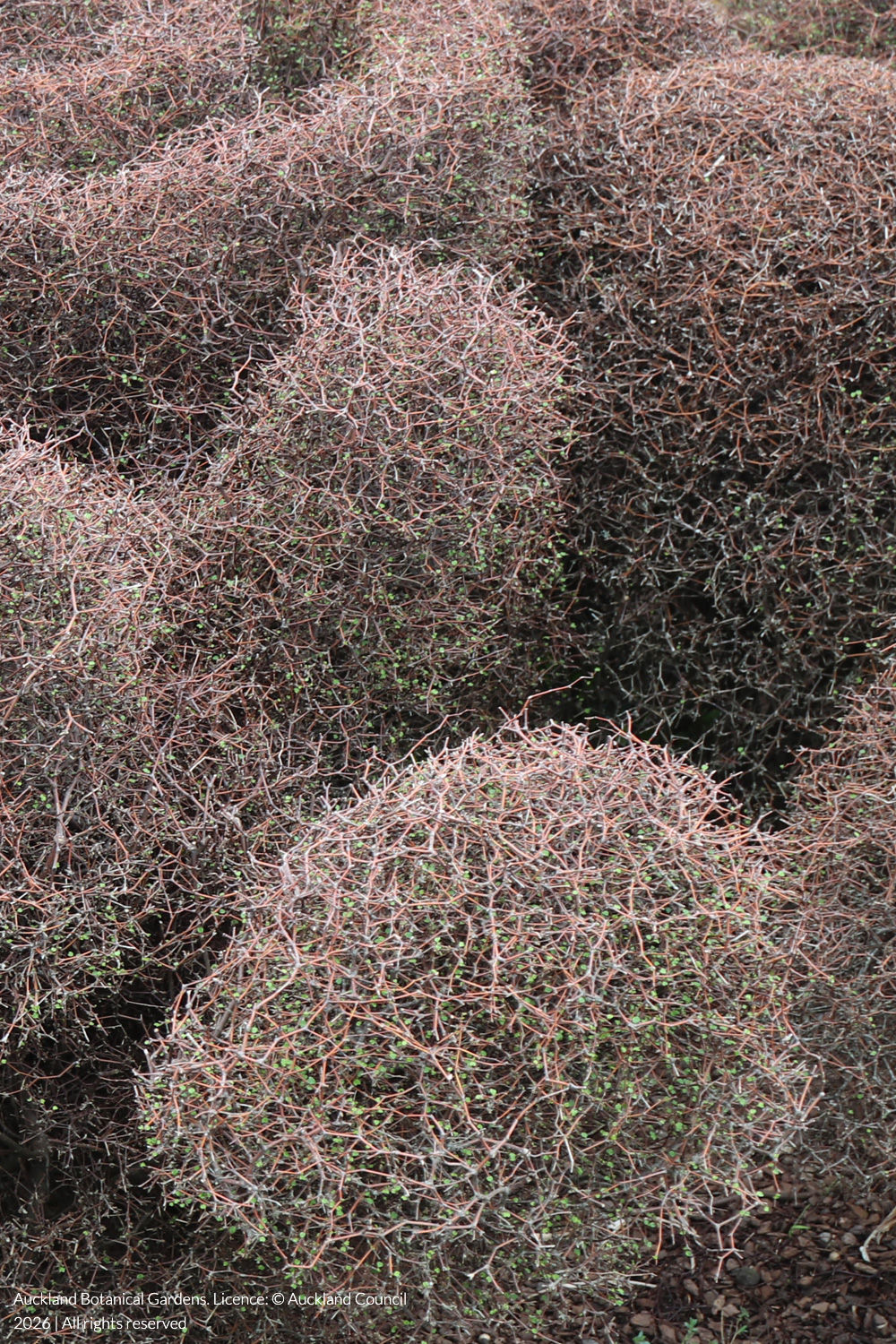
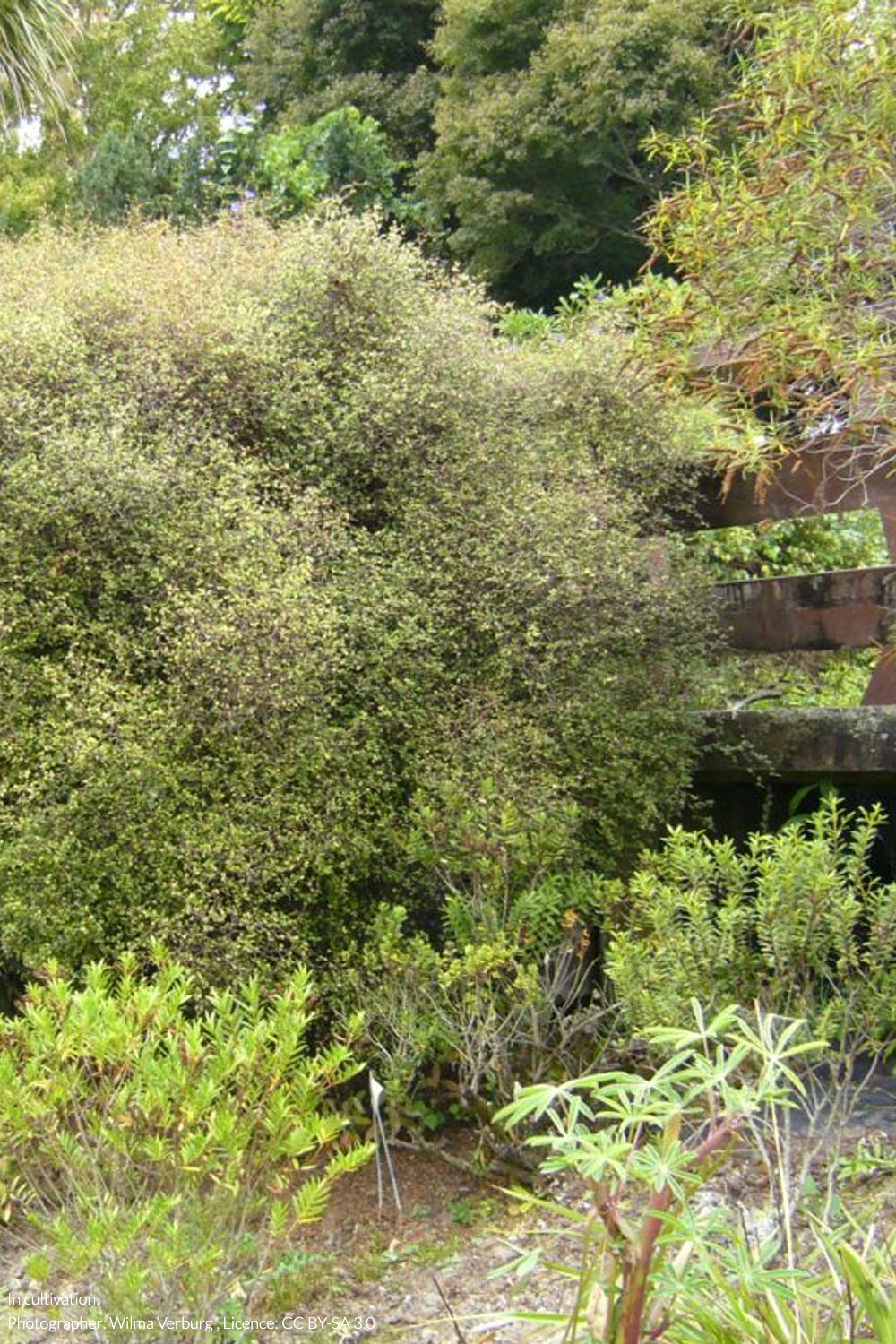
A distinctive shrub celebrated for its intricate network of wiry, interlacing branches and small, bright-green heart-shaped leaves. This creates a unique texture, making it a popular landscaping plant, ideal for topiary or hedges. It's an extremely hardy coastal divaricating shrub, tolerating dry conditions and moderate winds. Delicate white flowers appear in summer, followed by translucent berries in autumn, which attract birds and insects. It thrives in full sun or partial shade and prefers well-drained soil. Its low maintenance and medium growth rate make it a versatile and resilient choice for various garden styles and gardeners of all experience levels.
typical habitat.
coastal scrub
scrubland
drainage.
dry
free draining
well drained
moist
sun.
full sun
partial shade
mature specifications.
height | 2m
width | 1.5m
pollinators calendar.
flowering | August - January (- May)
fruiting | October - June
did you know?
Muehlenbeckia astonii is critically rare in the wild, with most locations having only a few old plants and minimal new growth. This scarcity stems from its reproductive needs; male and female plants are separate and require cross-pollination, preventing isolated individuals from reproducing naturally. Consequently, most wild populations need active management for recovery.
In response, Wellington and Hutt Valley city councils launched a propagation effort when only 48 wild M. astonii remained in the Wellington region. They successfully cultivated male and female plants from various wild populations in close proximity on traffic islands, enabling cross-pollination. These island populations became a crucial source, allowing 1500 plants to be propagated from cuttings and subsequently replanted in Turakirae Reserve, a former habitat.