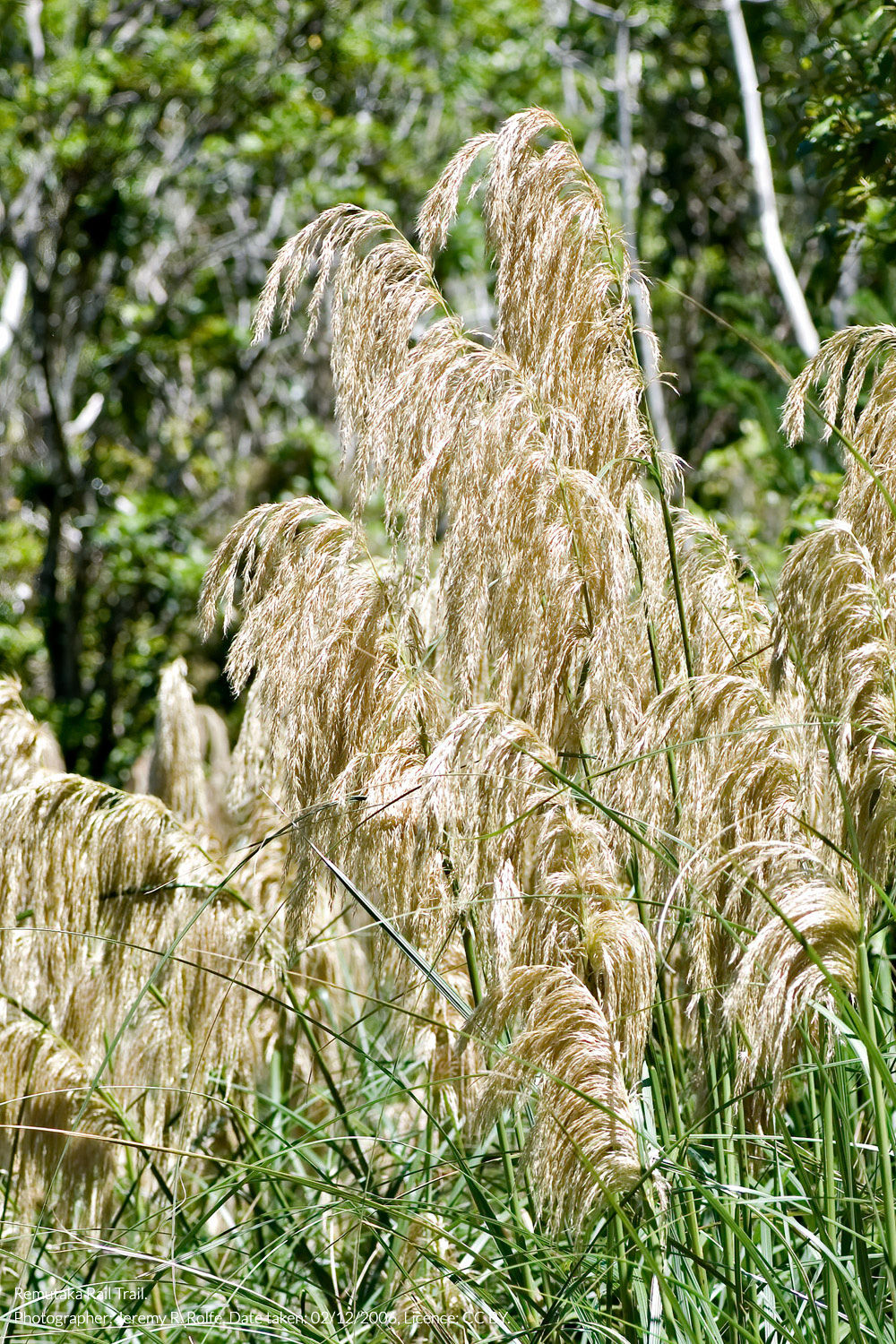


kakaho
about.
Austroderia fulvida | kakaho
A large, fast-growing tussock grass forming a dense, fountain-like clump of coarse, arching green foliage. Sharp-edged leaves create strong texture and provide substantial year-round structure, making it effective for shelter and large-scale planting.Tall, feathery flower plumes appear from late summer into autumn in soft creamy to golden-bronze tones, adding height and movement. Thriving in full sun, it tolerates wind, exposure, and a wide range of soils, particularly moist sites, and is well suited to revegetation, shelterbelts, and naturalistic landscapes.
typical habitat.
streamsides
lake margins
dunes
forest margins
cliff faces
drainage.
well drained
free draining
sun.
full sun
mature specifications.
height | 1.5m
width | 2m
pollinators calendar.
flowering | September–November (later at higher elevations, e.g. December–January in central North Island)
fruiting | October–March
did you know?
Toetoe held strong cultural and practical value in Māori life. It was used for thatching and in tukutuku panels lining whare, while the stalks (kākaho) were favoured for basket weaving, particularly for cooking in boiling water or steam, as they did not taint food like some other fibres. It also had medicinal uses, including treatments for diarrhoea, kidney ailments, and burns, and its flower plumes carried ceremonial significance, especially during sea voyages and upon reaching new land.