
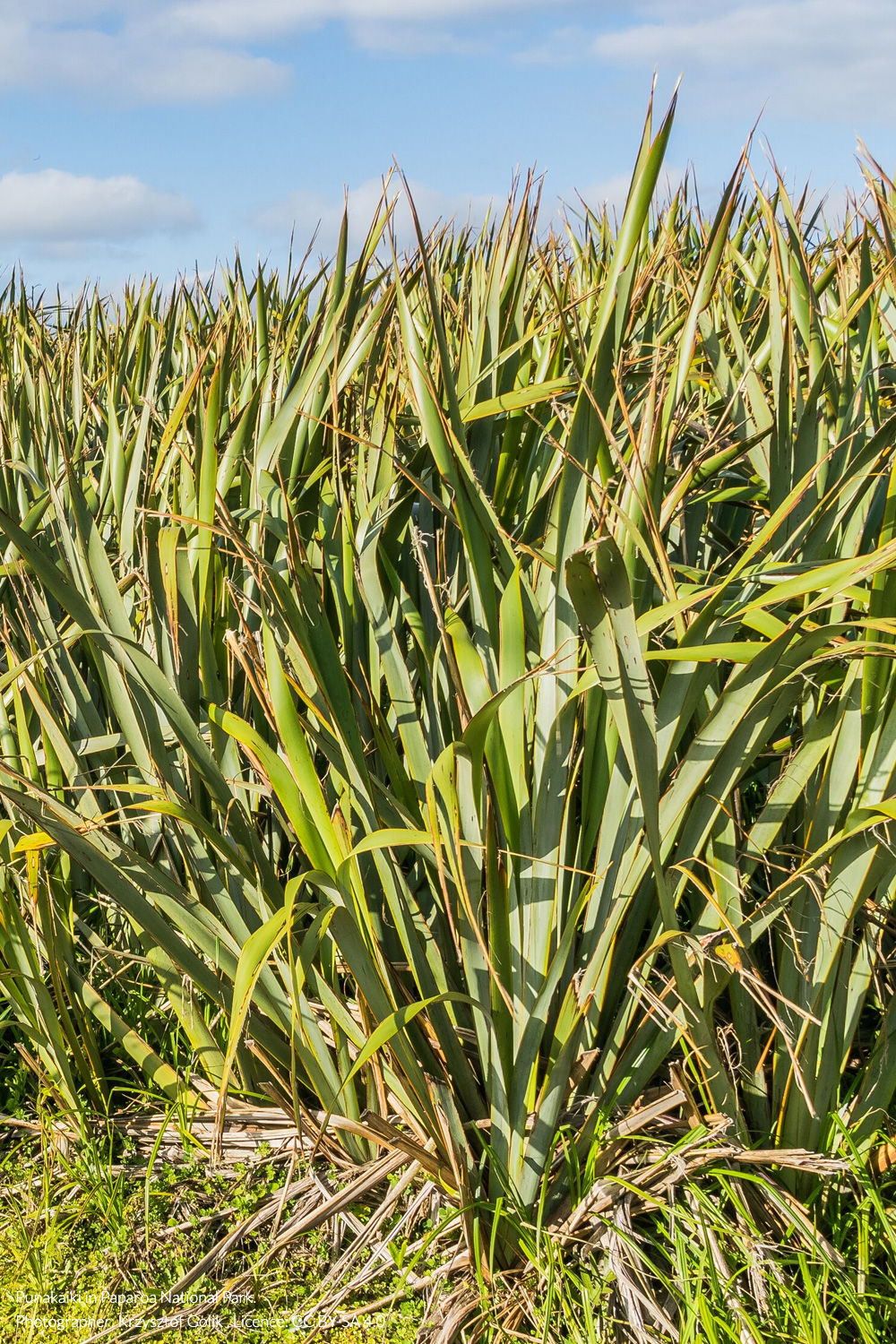


harakeke
about.
Phormium tenax | harakeke, flax, kōrari (Māori name for inflorescence)
A striking, robust perennial forming large clumps of broad, vibrant green, sword-like leaves, reaching about 2m tall and wide. Beyond its significant value for weaving and fiber production, it's an excellent choice for low shelter and erosion control due to its extensive root system. In summer, erect stems bear twisted flowers, producing nectar that attracts birds and butterflies, followed by black seed pods in autumn. Very hardy, it thrives in diverse environments from swamps to coastal regions, preferring full sun and good drainage. This popular landscape plant is often mass-planted on banks for both stunning display and soil stabilisation, or used to create color contrast.
typical habitat.
coastal scrub
coastal forest
lowland forest
montane forest
riparian forest
wetland
drainage.
wet
moist
well drained
free draining
dry
sun.
full sun
partial shade
mature specifications.
height | 2m
width | 2m
pollinators calendar.
flowering | (September-) October-November (-January)
fruiting | (November-) December (-March)
did you know?
Harakeke was the most vital weaving fiber for Māori before European contact. Its versatile leaves were expertly prepared in various ways—from tough, thick-woven mats and kete to fine cloaks and rope.