

haumata
Chionochloa flavicans | haumata, snow tussock
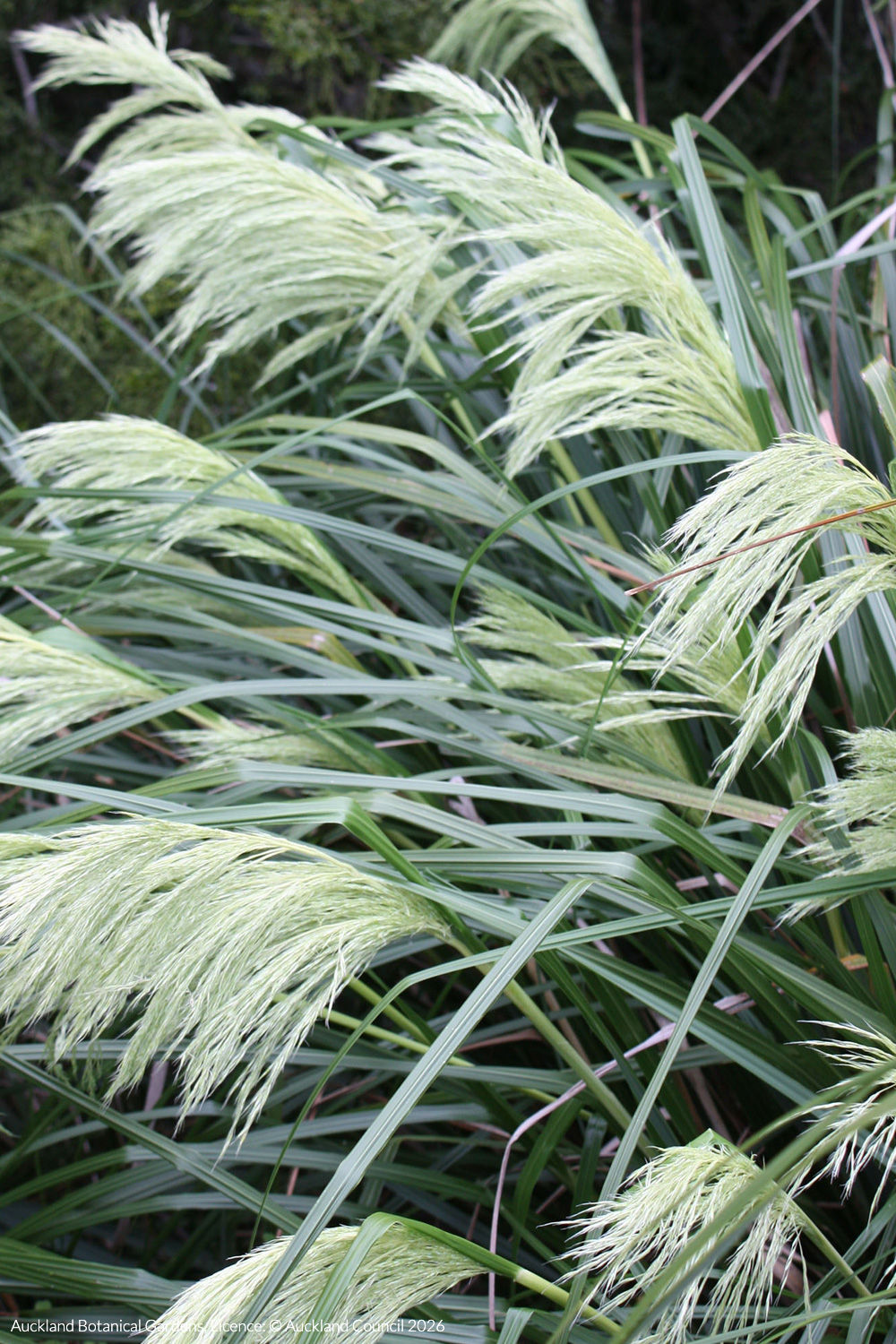
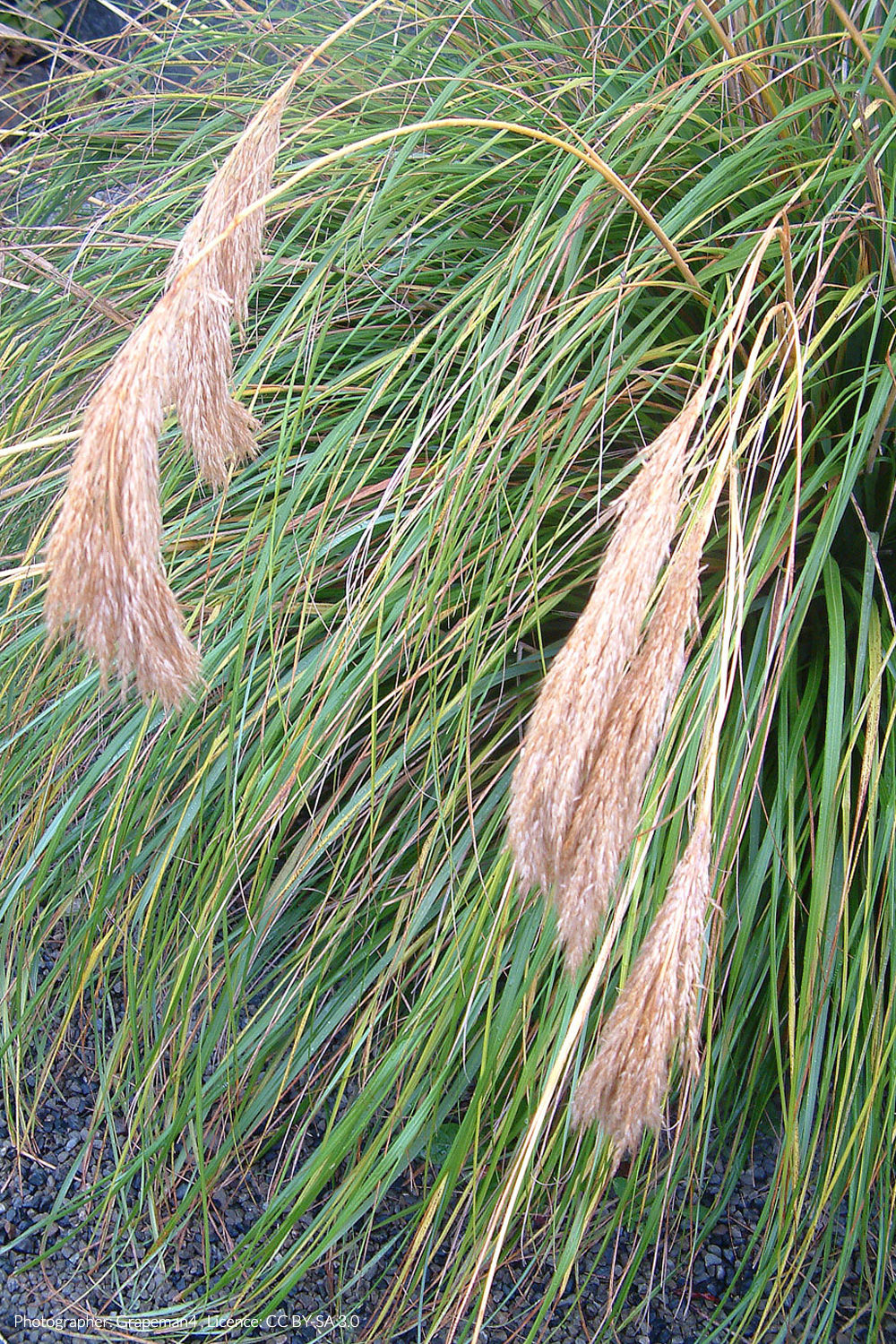
A striking tussock with arching, strappy foliage and feathery seed heads that catch the light and move in the breeze. It provides texture and softness in the landscape, with tones that shift between green and yellow through the seasons. This adaptable grass thrives in full sun to partial shade and prefers free-draining soil. Naturally found on cliffs and rocky faces, it is resilient to drought, wind, and coastal exposure. Plant in drifts for a groundcover effect, as edging, or as a graceful feature beside ponds, streams, or pathways. It also performs well in mixed borders and containers, making it suitable for both large landscapes and smaller gardens. Its seed plumes appear from late summer into autumn and provide food for native birds while adding a light, cloud-like texture to the planting.
typical habitat.
limestone cliffs
drainage.
moist
well drained
free draining
dry
sun.
full sun
partial shade
mature specifications.
height | 1.2m
width | 1.5m
pollinators calendar.
flowering | September–November
fruiting | November–May
did you know?
It its scientific name literally translates to "snow grass," derived from the Greek words chion (snow) and chloe (grass), which is a fitting name for the plant's stunning, fluffy white plumes that glisten beautifully with frost in winter.